Solving the Split Incentive in Maritime Decarbonisation: Insights from ABL and Stephenson Harwood
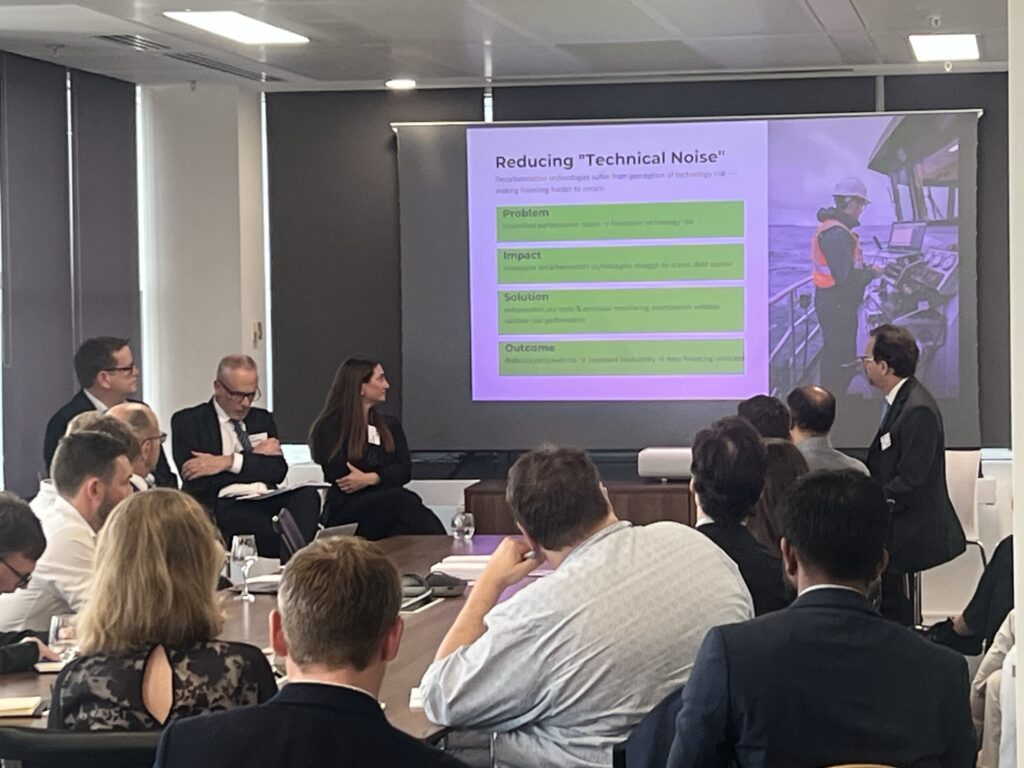
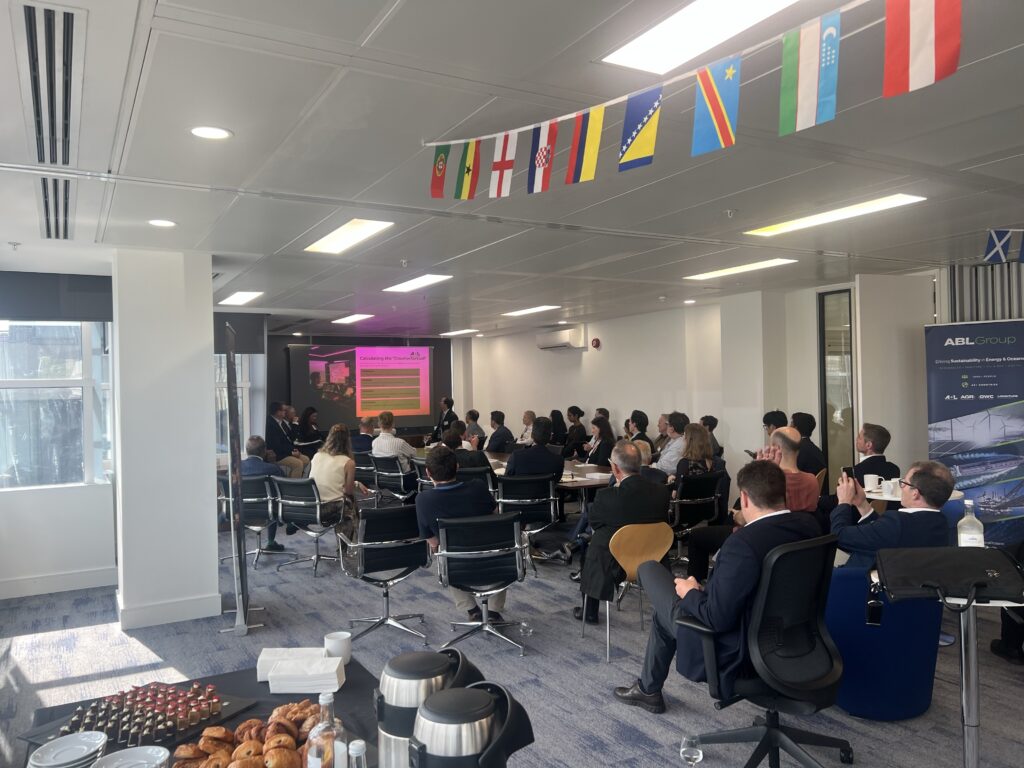
On 17 June, ABL and Stephenson Harwood jointly hosted an event exploring one of the most persistent barriers to maritime decarbonisation: the misalignment between those who invest in decarbonisation measures and those who benefit from them.
Bringing together legal, technical and financial perspectives, the event panel discussion highlighted that the split incentive is not simply a contractual issue, but a broader coordination challenge arising from the fragmented structure of the shipping industry.
Chaired by Stephenson Harwood’s Haris Zografakis, the discussion featured contributions from ABL’s Stefano Scarpa and Paris Mangriotis, alongside Stephenson Harwood’s Pia Rebelo and LCM Partners’ Graeme Laing. The following article summarises the key takeaways from the discussion, highlighting where progress is being made and where further alignment across the value chain is still needed.
1. Legal Perspective – Aligning Costs, Benefits and Risks

Key points by Pia Rebelo, Stephenson Harwood LLP
- A key obstacle to decarbonisation is that shipowners typically bear the capital costs of retrofits and new technologies.
At the same time, charterers benefit from fuel savings and regulatory compliance advantages such as lower emission trading scheme costs.
- Existing contractual structures can discourage operational efficiency.
For example, traditional chartering arrangements often prioritise speed and schedule certainty over fuel efficiency, while the costs and benefits of alternative fuels are frequently allocated unevenly between owners and charterers.
- New solutions are emerging, but their deployment requires contractual innovation and commercial models that better allocate costs, benefits and risks between stakeholders.
The freedom of contract between the parties provides a legal basis for such arrangements; however, commercial willingness to enter agreements on different terms is needed.
2. Technical Perspective – Data Underpins Decarbonisation

Key points by Stefano Scarpa, ABL
- Reliable baselines, independent verification and ongoing performance monitoring are essential to demonstrate emissions reductions, support commercial arrangements and unlock financing.
Importantly, participants highlighted that while robust measurement is necessary, pursuing perfect accuracy risks creating complexity that may hinder deployment and scalability.
- A major challenge is the variability of technology performance across vessel types, routes and operating conditions.
This uncertainty can make it difficult for owners, charterers and financiers to assess value and share benefits fairly. Independent technical due diligence and audits can support the assessment of value and the fair allocation of benefits.
- Operational performance depends not only on technology but on crew engagement, which is a key driver of vessel operational energy efficiency.
Energy management systems, crew engagement measures and training are therefore essential.
3. Financial Perspective – Capital Exists, but Scale and Certainty Are Needed

Key points by Graeme Liang, LCM Partners
- The principal challenge is not a lack of capital, but the difficulty of creating investment opportunities that are scalable, repeatable and supported by credible performance data.
- Financiers generally prefer to finance vessel-level outcomes, such as overall emissions reductions, rather than assessing multiple technologies individually.
They also favour proven, solutions over bespoke projects that require extensive due diligence. A more integrated “technology supermarket” approach could simplify technology adoption for shipowners.
- Potential financing models include unsecured lending, subscription-based offerings, manufacturer-backed financing and performance-linked structures.
Risk-sharing emerged as a key theme, with OEMs potentially supporting deployment by assuming a portion of performance risk. Performance insurance may also help reduce uncertainty and increase investor confidence.
4. Audience Takeaways – A Fragmentation and Coordination Challenge
A recurring theme in audience contributions was that the split incentive may be a symptom of a deeper issue: the vertical fragmentation of the shipping industry. Ownership, operations, fuel procurement, cargo interests and financing are frequently separated across different parties, meaning that costs, risks and benefits are distributed unevenly throughout the value chain.
Participants also emphasised the need for solutions that are simple, scalable and commercially practical rather than overly complex or dependent on perfect measurement methodologies.
Another key takeaway was the importance of engaging cargo interests more directly. Cargo owners may ultimately play a critical role in driving investment by placing greater value on emissions reductions, Scope 3 reporting and supply chain resilience.
Conclusion
The event highlighted that the uptake of emissions reduction technologies is fundamentally a coordination problem rather than a technology problem.
Progress will depend on improving data transparency, creating scalable commercial and financing structures, sharing risk more effectively, and aligning incentives across the entire maritime value chain.
The discussion marked a shift from identifying the split incentive as a barrier to instead exploring practical pathways for overcoming it.