From IMO 2050 to Implementation: The Reality of Maritime Decarbonisation
Reporting from the IMO’s MEPC 84 with ABL’s Stefano Scarpa
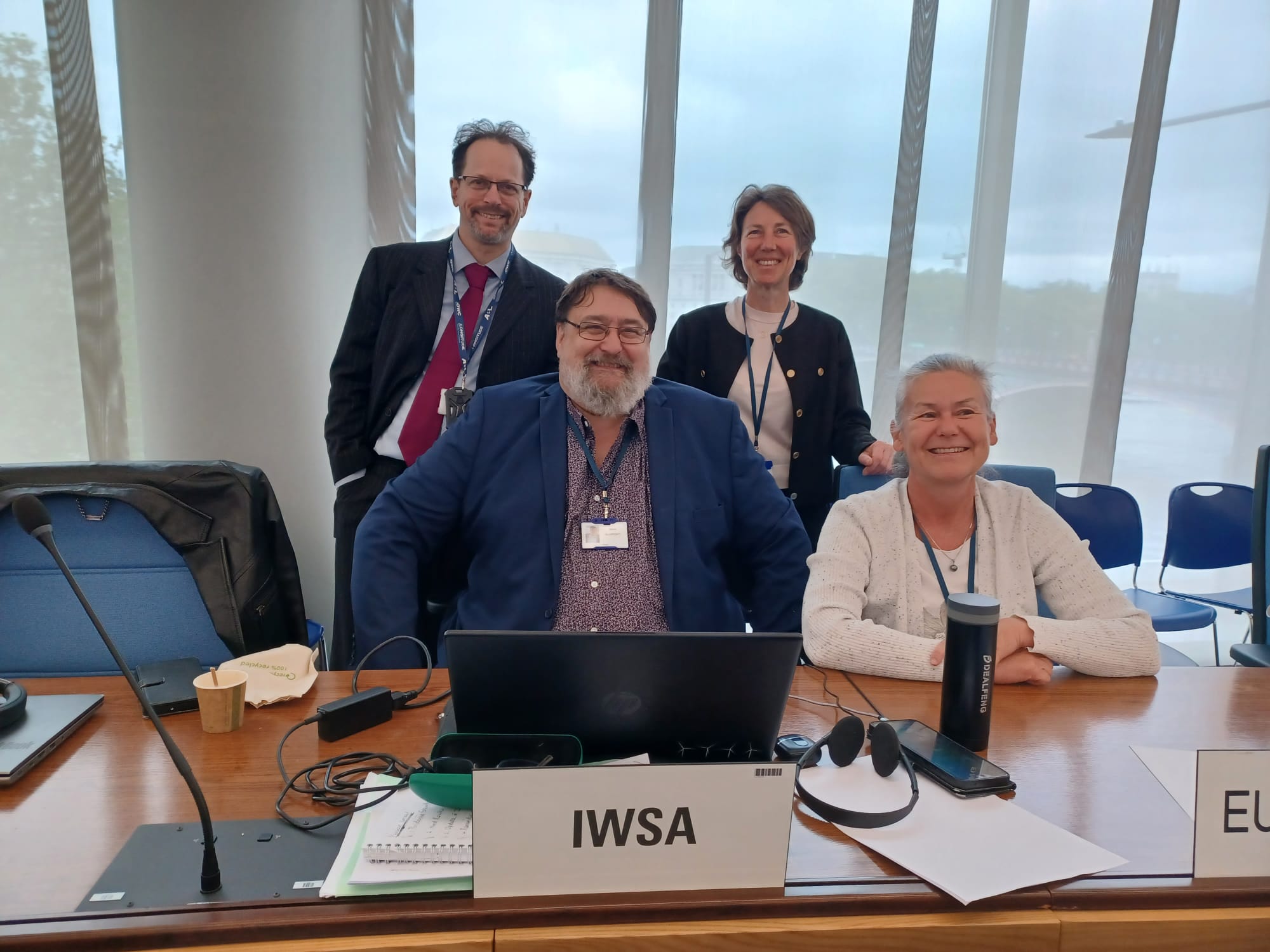
at the MEPC 84
Last week, two key meetings took place at the International Maritime Organization (IMO), aimed at advancing talks and global positioning on maritime decarbonisation:
- The intersessional working group on greenhouse gas (GHG) emissions (ISWG‑GHG 21)
- The Marine Environment Protection Committee (MEPC 84)
Stefano Scarpa, ABL’s Director of Maritime Decarbonisation, attended both meetings, as part of the International Windship Association (IWSA) delegation.
Here, he shares his reflections on the discussions, the outcomes, and the increasingly choppy waters ahead as the maritime industry moves from ambition to delivery.
The IMO 2050 challenge: why the debate has now shifted
The International Maritime Organization’s 2050 ambition has moved decisively from high‑level target setting into a far more complex phase: implementation under political uncertainty.
Outcomes from MEPC 84 confirmed a critical reality for shipowners, operators and investors alike – the technical foundations for decarbonisation are advancing faster than the political frameworks required to support them.

While headlines continue to focus on the unresolved IMO Net‑Zero Framework (NZF), the substance of MEPC 84 tells a deeper story. Regulation is no longer judged primarily on stated policy intent. Even as global frameworks remain politically unresolved, scrutiny is increasingly shifting toward demonstrable performance: measured emissions, defensible assumptions, and the execution risk across fuel and technology pathways. This is where maritime decarbonisation will ultimately be won – or lost.
MEPC 84: technical certainty, political fragility
MEPC 84 strengthened the backbone of IMO decarbonisation through incremental but material advances:
- Energy efficiency short‑term measures (CII, SEEMP, EEDI/EEXI and IMO DCS) were refined, not reinvented, confirming the likelihood that they will dominate compliance through the late 2020s.
- The IMO system moved decisively beyond carbon dioxide only with guidelines to measure and verify non‑CO₂ emissions, with new guidelines for methane (CH₄) and nitrous oxide (N₂O) monitoring, engine load monitoring and regulations for continuous emissions measurement systems (CEMS) to monitor these gases.
- Fuel lifecycle assessment (LCA) frameworks were maintained but remain under debate, particularly regarding fossil fuel default emission factors and the treatment of lifecycle emissions and sustainability assumptions for biofuels. The work of the GESAMP-LCA Working Group continues on these themes.
- Onboard carbon capture and storage (OCCS) progressed from concept to structured regulatory pathway, with accounting, verification and certification now firmly on the IMO work programme.
In parallel, the IMO Net‑Zero Framework – combining a Global Fuel Intensity (GFI) standard with an economic element – remains politically unresolved. MEPC 84 again exposed deep division on pricing mechanisms, governance and legal procedure, with adoption deferred and fragmentation risk rising.
Why economics still matter – and why avoidance is not neutral
At the heart of the NZF deadlock is not technology, but control of pricing, revenue and institutional authority. Three political camps broadly have crystallised:

- Those defending the MEPC 83 architecture;
- Those opposing any global economic element;
- And Pacific Island States advocating a simple universal levy.
From a decarbonisation perspective, the implications are stark. Fuel switching cannot scale without an economic signal. Without it, cost differentials between conventional and low‑ or zero‑carbon fuels remain structurally unresolved, and compliance risks becoming punitive rather than enabling.
Crucially, delay does not preserve neutrality. The absence of an IMO‑anchored economic mechanism increases the likelihood of regional regimes dominating, accelerating regulatory fragmentation and compliance complexity for globally trading fleets.
The real shift: from policy risk to execution risk
What MEPC 84 made unambiguously clear is that decarbonisation risk is no longer primarily policy risk – it is execution risk. Owners and operators are being judged less on declared ambition and more on demonstrable capability:
- Can methane slip and non‑CO₂ emissions be measured, not assumed?
- Are chosen fuel pathways credible under lifecycle scrutiny?
- Can vessels optimise CII and SEEMP performance under tightening data requirements?
- Are retrofit technologies, including wind‑assisted propulsion or OCCS, verifiable and defensible within emerging IMO (and other) frameworks?

The IMO Data Collection System is now explicitly entrenched as the evidence base for both current and future regulation. In this environment, data credibility becomes strategic.
What this means for shipowners and the wider maritime value chain
For the industry, three conclusions stand out:
- Near‑term compliance remains anchored in today’s measures – CII, SEEMP and fuel cost exposure will define operational risk through the remainder of the decade.
- Medium‑term competitiveness will be shaped by the ability to decarbonise cost-effectively – through credible emissions and energy measurement, low and no-regret efficiency measures, selective deployment of technologies such as wind propulsion and fuel pathway optionality under regulatory and political volatility.
- Mid‑term measures remain politically fragile, making strategic advisory, scenario analysis and compliance optimisation essential, not optional.
How ABL supports credible maritime decarbonisation

ABL supports shipowners, operators and investors as the industry moves from ambition to delivery — helping them navigate execution risk, regulatory uncertainty and increasing scrutiny on emissions credibility.
ABL’s approach to clean shipping is grounded in this reality. Across the Group, we support clients with:
- Robust decarbonisation pathway and execution‑risk assessment, supporting fleet‑ and asset‑level decisions on viable decarbonisation options, sequencing, and low‑ and no‑regret measures that remain defensible under evolving IMO and regional frameworks.
- Advisory on emissions measurement and monitoring capability, including readiness for non‑CO₂ emissions monitoring and future data and verification requirements, ensuring that decarbonisation and efficiency improvements can be credibly demonstrated rather than assumed.
- Independent measurement, verification and assurance of emissions performance and Energy and emissions baselining and data‑credibility review.
- Cost‑effective energy‑efficiency and short‑term decarbonisation measures, including strategic optimisation of SEEMP and CII performance and energy management systems implementation.
- Decarbonisation transition‑risk advisory within technical due diligence, supporting investment, financing and asset decisions by assessing future compliance exposure, fuel and technology pathway optionality and resilience under regulatory and political volatility.
Maritime decarbonisation is no longer tested on intent alone. Even as global frameworks remain politically unresolved, it is increasingly tested through demonstrable performance: credible data, defensible assumptions, and the ability to execute decisions that remain robust across multiple regulatory futures. The path to IMO 2050 will belong to those who can translate ambition into implementable action, not just promise outcomes.
Discuss emissions compliance and your route to decarbonisation with ABL
Explore our expertise in emissions consulting, technical due diligence and clean shipping solutions – including alternative fuel engineering and vessel design delivered with our sister company, Longitude.
Contact us

Stefano Scarpa
Director of Maritime Decarbonisation, ABL