
Highlights from ABL Group’s Electrification Event: Insights Shaping 2030 and Beyond
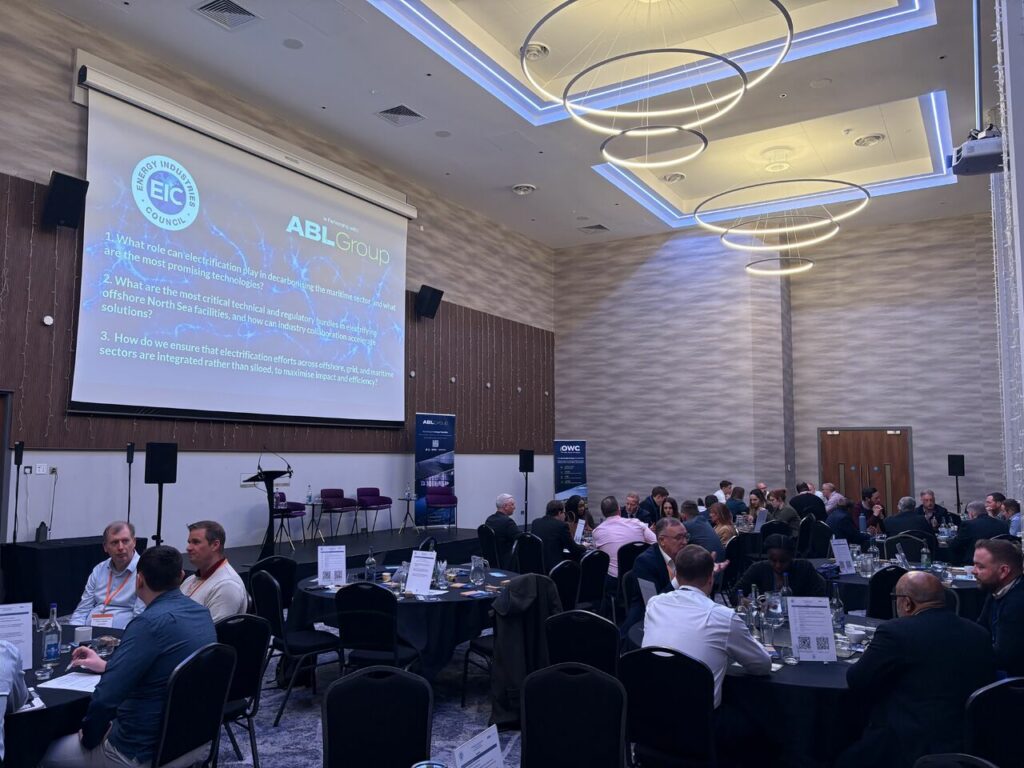
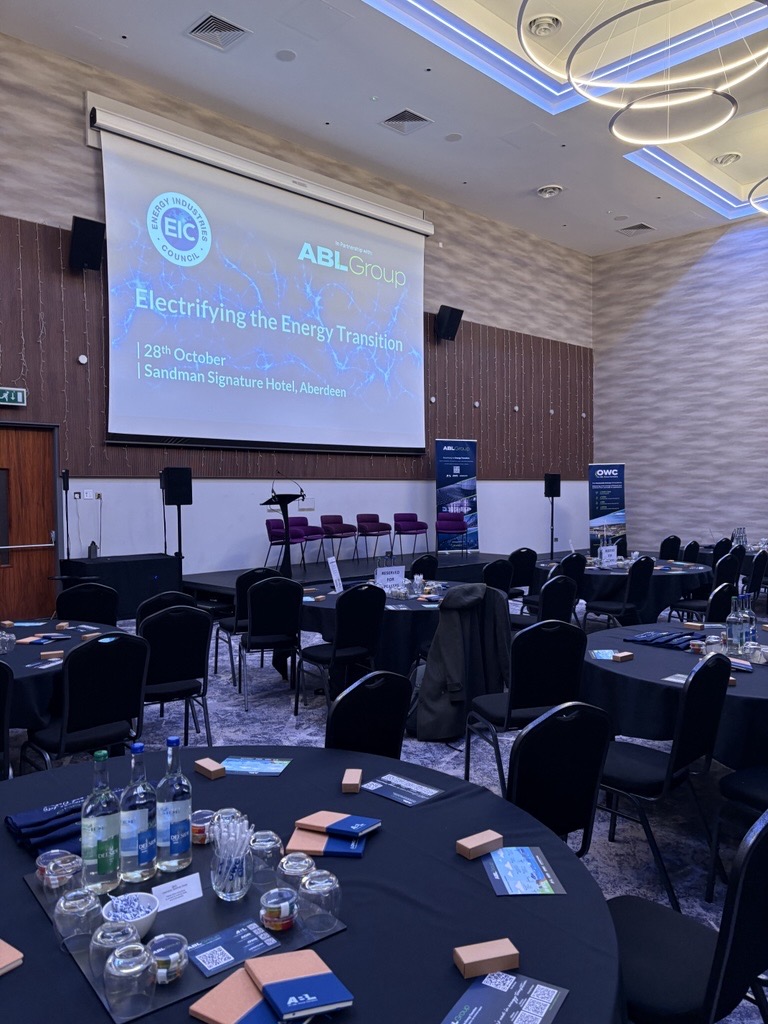
On 28th October in Aberdeen, ABL Group partnered with the Energy Industries Council (EIC) to host Electrifying the Energy Transition, an event that brought together industry leaders to explore how electrification can accelerate decarbonisation across the energy sector.
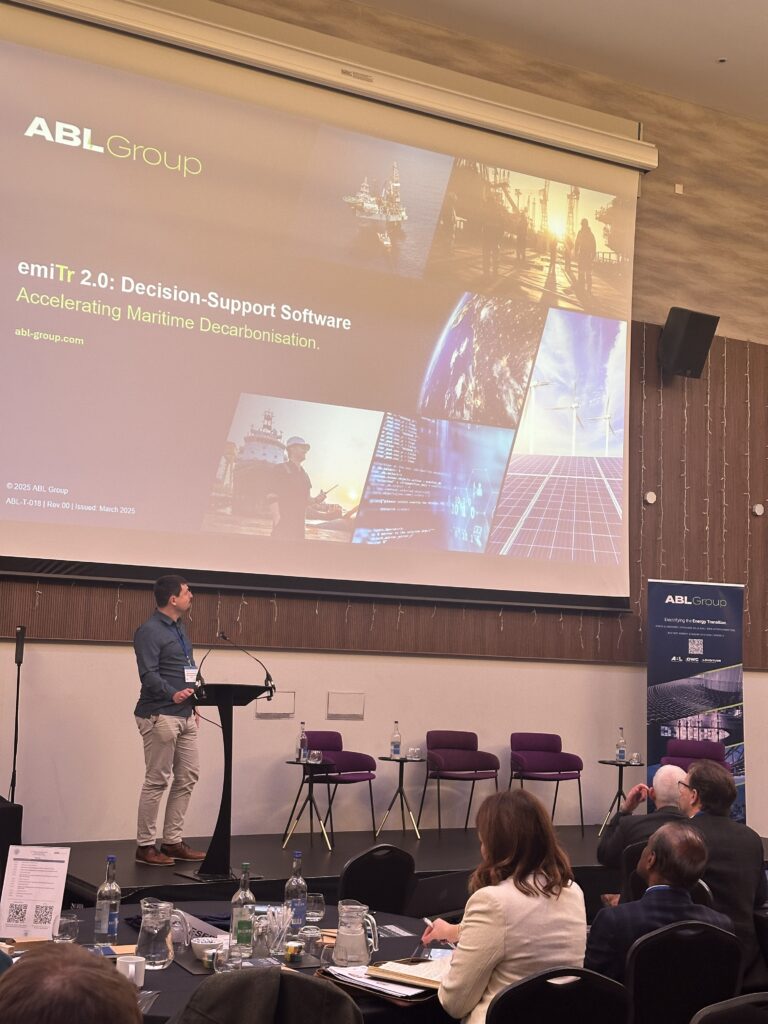
The day featured three panel discussions and a technical presentation, covering themes from offshore oil and gas electrification to port and maritime decarbonisation, and the integration of renewables into existing infrastructure.
With representatives from operators, regulators, technology providers, and supply chain experts, the event provided a collaborative forum to share insights, challenges, and solutions for achieving net-zero ambitions.
Below are highlights from the three panels hosted throughout the day:
Energising Ports and Maritime to an Electrified Future
This panel examined how ports can transition to clean energy. Panellists highlighted that while technology for shore power and batteries is ready, the real challenges lie in grid limitations, costly infrastructure upgrades, and legacy systems.
Financing remains a major hurdle, with high upfront costs and electricity often pricier than marine fuels. Regulatory uncertainty adds risk, making clear mandates and incentives essential. European policies requiring shore power by 2030 were cited as accelerators, but UK pricing and policy complexity persist.
Collaboration across ports, shipowners, regulators, and investors was seen as critical to avoid fragmented efforts. The discussion closed with calls for pilot projects, risk-sharing business models, and long-term commitment to decarbonisation.

Panellists:
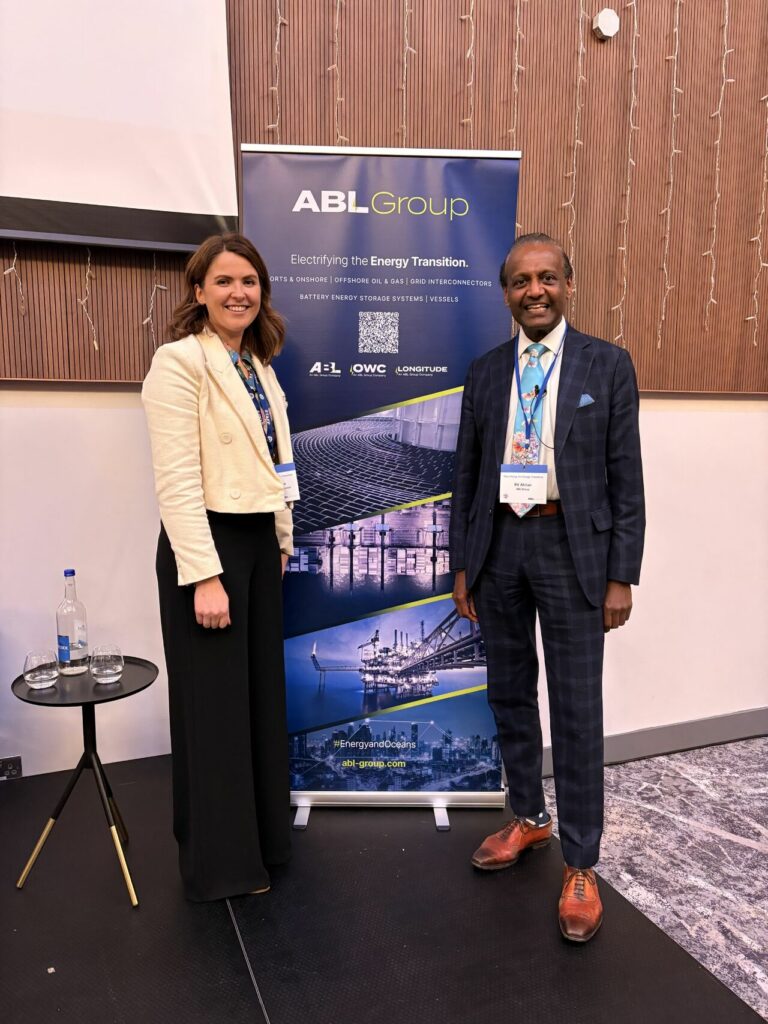
- Stefano Scarpa, ABL Group (Session Chair)
- Kevin Brown, Bibby Marine
- Jucilla Walters, NatPower Marine
- Aimee Besant, OWC
- Marlene Mitchell, Port of Aberdeen
Turning Offshore High Voltage – Electrifying North Sea Oil & Gas Facilities
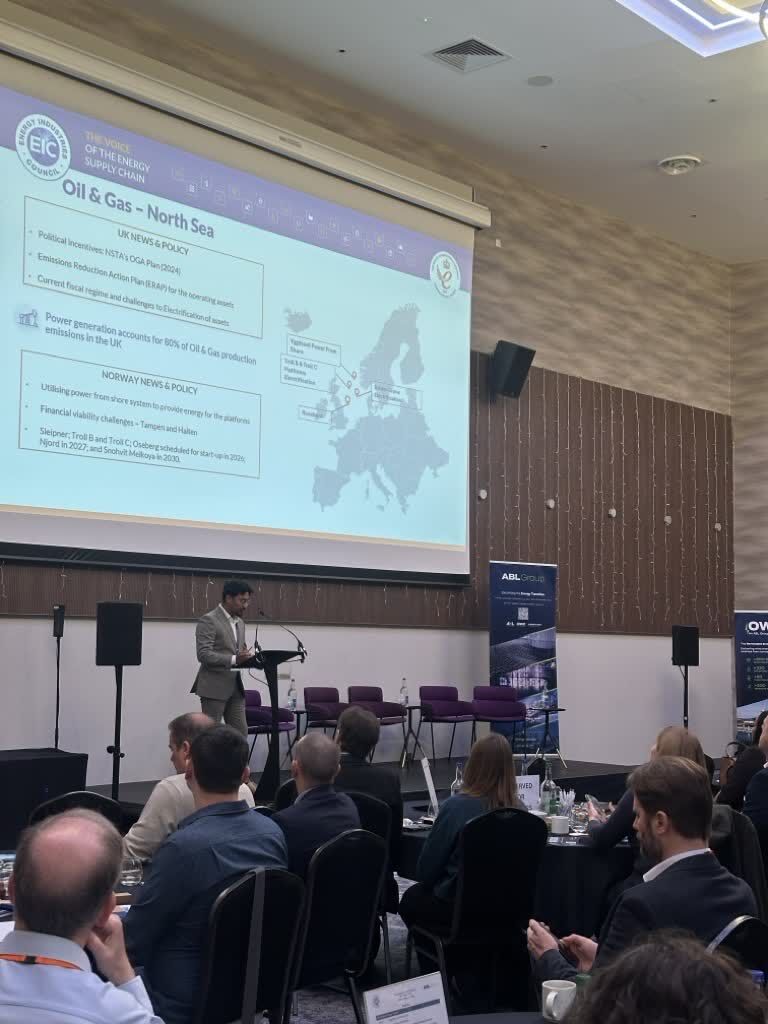
This panel examined pathways to decarbonise offshore operations through electrification. The North Sea Transition Deal targets net zero by 2050, with options including floating offshore wind, power-from-shore, and centralised power units.
Certain case studies showed emissions cuts of 20–35% via floating wind integration. However, brownfield electrification remains highly complex due to legacy infrastructure, space constraints, and technical challenges such as powering FPSOs.
Securing grid connections and managing high CapEx/OpEx add further barriers, compounded by fiscal uncertainty and fragmented asset ownership. Panellists emphasised collaboration, regulatory clarity, and integrated planning to align oil & gas, renewables, and carbon storage. Early lessons from pilot projects and greenfield designs will be critical to accelerate adoption.
Success hinges on shared infrastructure, open data, and pragmatic incentives to build momentum toward a fully integrated North Sea energy basin.

Panellists:
- Fran McCord, OWC (Session Chair)
- Fergus Kulasinghe, EnQuest
- Claire Tindle, Flotation Energy
- Andy Brooks, NSTA
- Martyn Tulloch, NZTC
- Mike Tholen, OEUK
Interconnectors and the Grid – Cost, Capacity, and the Road Ahead
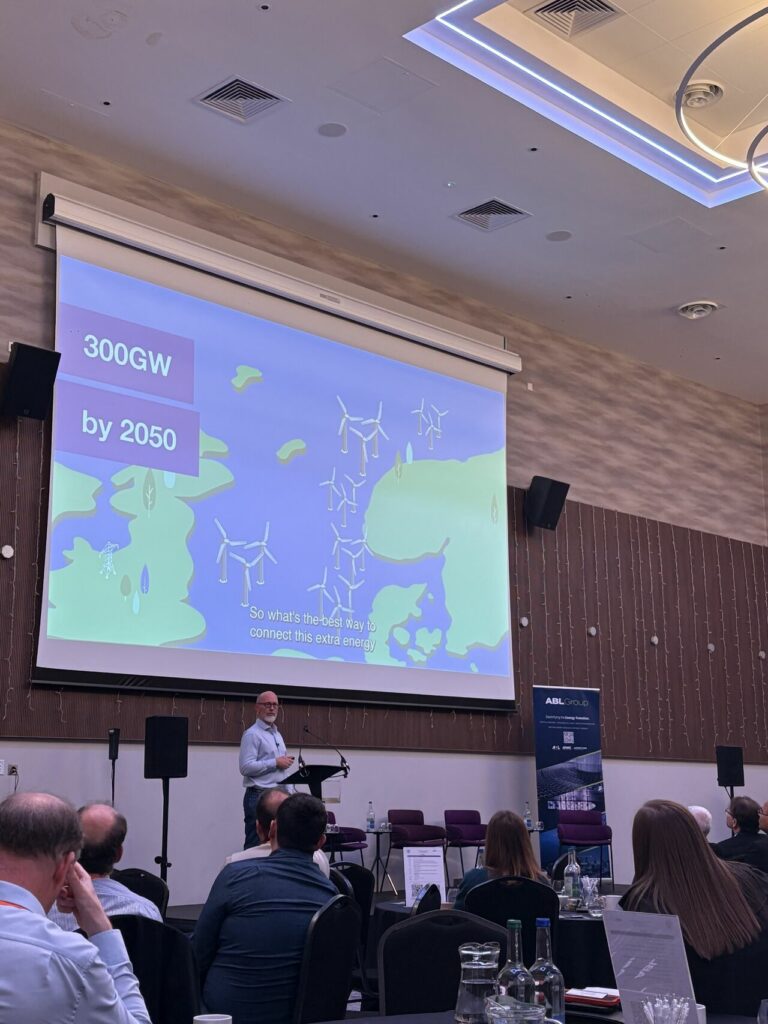
Rob Rome from National Grid opened this session by explaining the UK’s 8 GW portfolio of subsea HVDC interconnectors, which enable two-way electricity flows with Europe. He illustrated their critical role during the tight winter of 2020/21, when interconnectors prevented consumer disconnections, and highlighted their flexibility during crises such as the Ukraine war and European nuclear outages. Interconnectors respond to price signals, support peak demand, and export surplus renewables, operating under a “cap and floor” scheme that shares risk and has delivered consumer cost reductions without subsidies.
The panel explored future Offshore Hybrid Assets combining interconnectors and offshore wind, reducing onshore infrastructure and boosting efficiency. Key challenges include supply chain bottlenecks, financing, permitting, and regulatory uncertainty.
Collaboration, portfolio-level planning, and early engagement with manufacturers were emphasised as essential for scaling interconnection and meeting 2030–2050 decarbonisation targets.
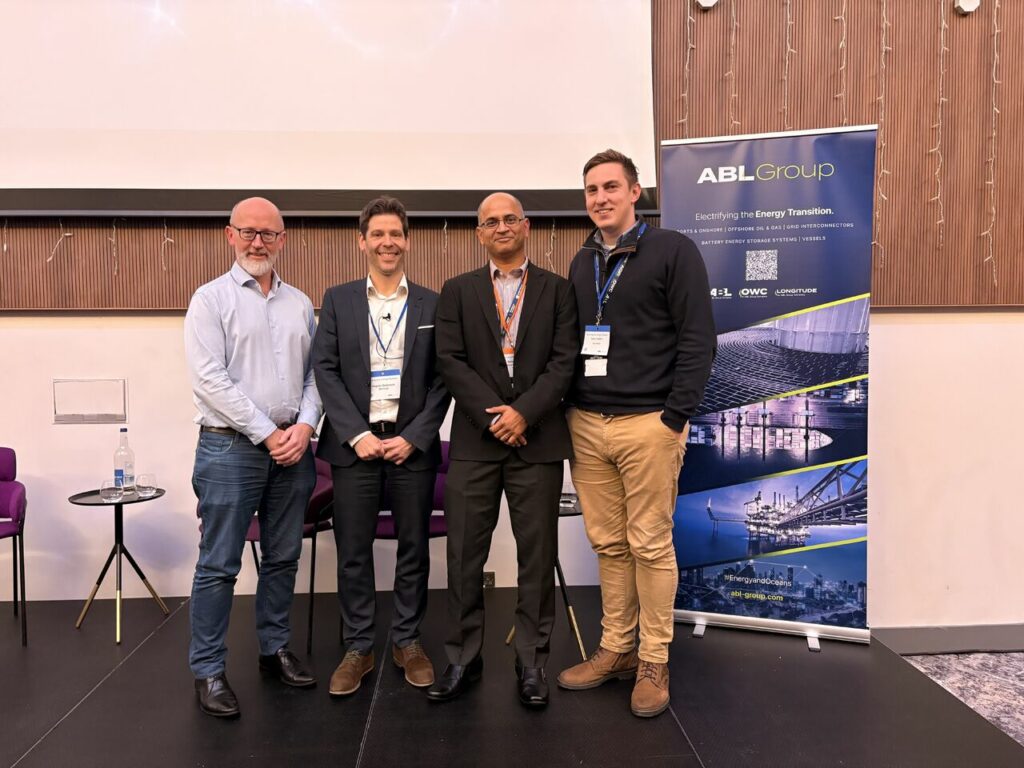
Panellists:
- Ashley Perrett, ABL Group (Session Chair)
- Rob Rome, National Grid
- Hugues Delanoue, ABL Group
- Rahul Jagdale, SSEN
Key event takeaways
Optimism remains and progress demands urgent action and sustained collaboration. The integrated nature of today’s supply chain spanning hydrogen, carbon capture, nuclear, offshore wind, onshore renewables, and battery storage was recognised as a major strength.
The panels aligned with the following clear actions:
- Advocate for government mandates to accelerate port and maritime electrification.
- Align infrastructure and commercial models with global leaders like Norway and China.
- Share learnings from pilot projects and foster open collaboration across the industry.
The event closed with a clear message: meeting, and ideally exceeding, 2030 electrification targets is essential through collaboration.
ABL Group’s Role in Electrification
At ABL Group, we support the energy transition by helping clients electrify the critical systems that power our world. With deep expertise across renewables, marine, ports, renewables and offshore infrastructure, our work includes:
- Offshore charging station design and integration
- Electrification of vessels and port infrastructure
- Grid interconnection and renewable integration
- Battery energy storage systems (BESS)
- Engineering advisory across project lifecycles
From early concept to implementation, we enable safe, reliable and future-proof solutions that support the path to net zero.